Answer 1
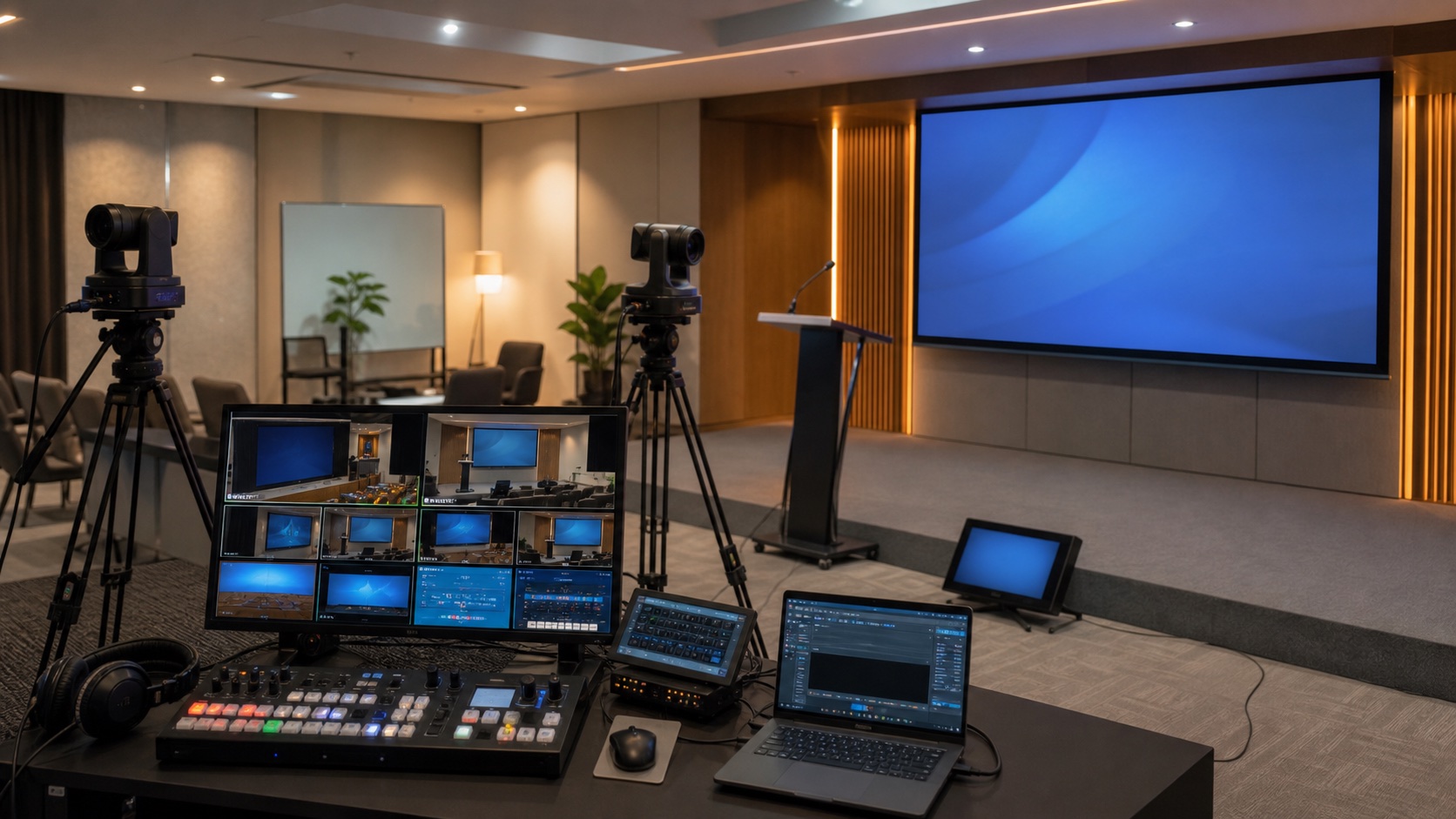
Two-camera starter: Wide room camera plus speaker/product/stage PTZ, compact switcher, audio feed, confidence monitor, recording, and streaming path.
Buyer guide
Small crews need fewer decisions during the show. The best setup is the one with clear presets, reliable signal paths, and an operator station that makes sense.
System audit first. Final proposal after room survey.
Fast answers
Start with the decisions that affect reliability, cost, and operator confidence.
Two-camera starter: Wide room camera plus speaker/product/stage PTZ, compact switcher, audio feed, confidence monitor, recording, and streaming path.
Three-camera upgrade: Wide, close, and alternate angle PTZ cameras with a dedicated controller and preset map for common show moments.
Operator map: Label presets around real actions: pulpit, host, guest, product table, panel, stage left, stage right, full room, and emergency wide.
Planning guide
Two-camera starter: Wide room camera plus speaker/product/stage PTZ, compact switcher, audio feed, confidence monitor, recording, and streaming path.
Three-camera upgrade: Wide, close, and alternate angle PTZ cameras with a dedicated controller and preset map for common show moments.
Operator map: Label presets around real actions: pulpit, host, guest, product table, panel, stage left, stage right, full room, and emergency wide.
Planning guide
If the use case is live production, start with the room, signal path, crew, and support plan before buying the camera or switcher.
JTJTi can turn the buying question into a system map and a practical equipment list.
FAQ
Yes, after checking the room, use case, current equipment, crew skill, cable path, network, audio source, and support needs.
No. These pages focus on live production, broadcast, streaming, education, worship, events, and corporate communication workflows.
Start here
Send the room, use case, deadline, and current equipment. JTJTi will help map the cameras, audio, switching, recording, streaming, network, operators, and support path.